Trigger points are knotted, tender areas that develop in your muscles. These trigger points are highly sensitive and can be painful when touched. Sometimes, a trigger point may be near the location of your pain. But they’re also often the cause of referred pain. Referred pain is pain that affects another part of your body.
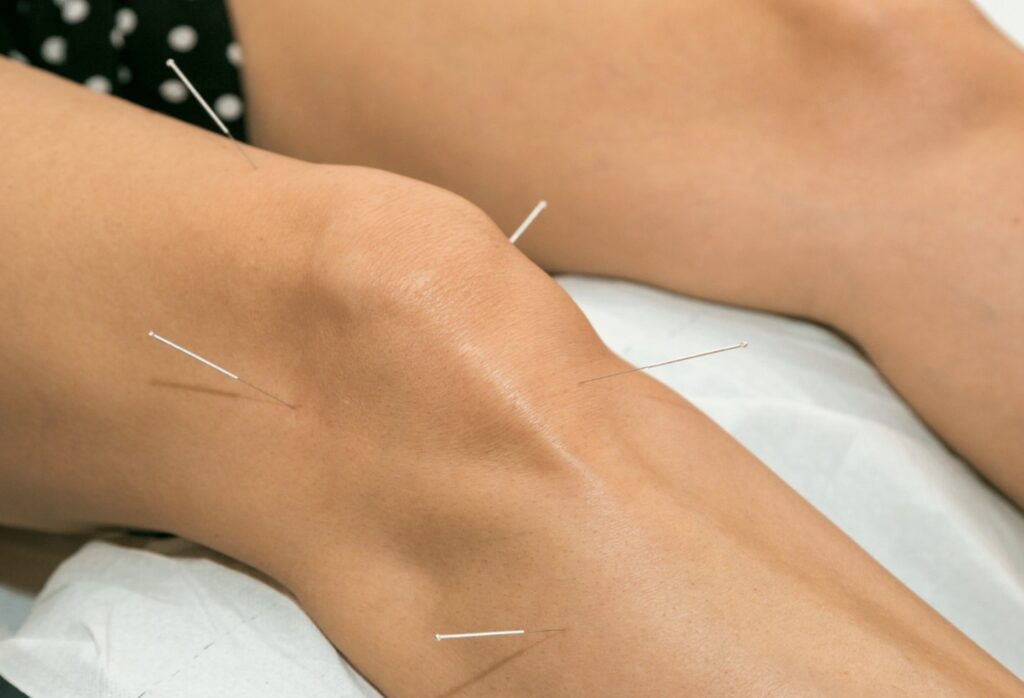
Physiotherapists use needles to alleviate your trigger points. When dry needling is applied to your muscles and tissues, it can decrease tightness, increase blood flow and reduce local and referred pain. Providers use solid needles that don’t contain any kind of medication. This is why the technique is called “dry.” Nothing is injected into your body.
How does dry needling work?
When your muscle is overused, it goes into an energy crisis where the muscle fibers aren’t getting an adequate blood supply. When they don’t get the normal blood supply, they don’t get the oxygen and nutrients that allow your muscle to go back to its normal resting state.
When this happens, the tissue near your trigger point becomes more acidic. Your nerves are sensitized, which makes the area sore and painful.
Stimulating a trigger point with a needle helps draw normal blood supply back to flush out the area and release tension. The prick sensation can also fire off nerve fibers that stimulate your brain to release endorphins. your body’s homemade pain medication.
Once your therapist locates a trigger point, they’ll insert a needle through your skin directly into it. They might move the needle around a little to try to get what’s called a local twitch response — a quick spasm of your muscle. This reaction can be a good sign that your muscle is reacting.
Some people feel improvement in their pain and mobility almost immediately after a dry needling session. For others, it takes more than one session.
Does dry needling hurt?
Trigger points are usually painful to the touch. So, before the needling, you may experience some pain while your provider is locating the trigger point.
You may also feel discomfort during the needling. Sometimes, people don’t feel the needle going in because it’s so small, but other times, people will feel a prick. When the needle is in the trigger point, it can be painful and cause a twitch response. Afterward, you may feel tightness or soreness near the insertion site, but it’s important to keep moving and stretching.
What does dry needling do?
Dry needling may help relieve pain and increase your range of motion. Conditions that
dry needling may treat include:
Joint issues.
Disk issues.
Tendonitis.
Migraine and tension type headache
Jaw and mouth problems, such as TMJ disorders.
Whiplash injury
Repetitive motion disorders, such as carpal tunnel syndrome.
Spinal issues.
Pelvic pain
Night cramps
Restless leg syndrome
Phantom limb pain
Post herpes neuropathy complication of shingles.
Who shouldn’t get dry needling treatments?
There are certain groups of people who shouldn’t receive dry needling. Providers don’t recommend the procedure for children under the age of 12 because it can be painful. You and your child will both need to provide consent, and you should consider other less invasive options first. Other groups who should consult with their physician before receiving dry needling include people who:
- Aren’t able to understand the treatment.
- Have compromised immune system
- Have just had surgery.
- Are on blood thinners.